USA

Updated: Sep 12
Our first visit to USA came about because of our medical training. At that time most of the doctors went to England for post graduate studies.
The story of how it happened is an interesting story. After completing his Post Graduate exam my husband began working in Cardiology section of our hospital. In those days in Mumbai Post Graduate speciality study was not available.
At that time, a senior physician in our hospital had started a department for cardiac patients. It was during this period that the renowned cardiologist Dr. Helen Taussig visited our hospital. My husband presented a case history at a meeting attended by her.
While she was still in Mumbai, my husband was invited to meet her. During their conversation, he expressed his desire to work in her department in the United States. To his delight, she agreed and invited him to join her team. New trainees in the United States usually joined in August. However, several of Dr. Taussig's fellows from other countries were leaving earlier than expected, so she asked my husband to come as soon as possible. As a result, he left for the United States in June.
I was still working in Mumbai in the Paediatric department and planning to finish my further studies as Post graduate.
I followed him during Easter holidays. Along with me was a friend from Chennai whose husband stayed in the same apartment as my sister in Philadelphia. So we both travelled on the same Air India flight, she from Chennai and I from Mumbai. As a result we both were received at Idlewild airport at New York. We first reached from there to Philadelphia for one night. This resulted a nice company for us also, so we visited Philly often. All of us in the group liked to play Bridge that made it enjoyable. Ordering Pizza was a must.
As I reached during Easter it gave me a chance to plan a short holiday. Travelling by Trailways bus we went to Florida with a stop over at Daytona Beach for one night.

My husband had already found for me to work at a Research study on New Born babies. This was a study organised at multiple places by NHA. I was lucky to get to work in this study at JHH (The Johns Hopkins Hospital). As this did not involve every day work for me I joined to work at Out patient department in Paediatric Neurology. Once a week all of us were required to meet in the Office of Dr. Clark to present and discuss the case seen in Out patient.
Also one member of Paediatric Neurology , I think his name was Dr. Mc’lean used to visit a center in city of retarded children, I used to go with him. That helped me to learn a little more of Paediatric Neurology. We lived close to hospital so use of car was not needed. A little later we got our car so we had freedom to visit friends etc.
In early days most of our visits outside of Baltimore used to be to Philadelphia, as my sister studied at Univ. of Pensilvania. She stayed in an apartment where we had several friends known to us. All of us liked to play Bridge and often shared the meals. Ordering a Pizza was a must.
By than we bought a car also, to make it easy to get around in Baltimore.
During our stay, we made the most of the cultural opportunities available. We attended concerts by renowned musicians such as Dave Brubeck and watched several famous stage productions, some of them among the most popular shows of the time. Although I no longer remember all their names, the experience of seeing live theatre in America remains one of my happiest memories.
We frequently visited Philly. A family was assigned to my sister by University so that on weekends and holidays can be enjoyed with them. Later this lovely family always invited us also for major celebrations.
As we couldn’t afford to travel to places we always met our friends from India in other cities. This resulted in our visit to Chicago to meet one of our best friend from India, who was doing internship in a hospital. Instead of spending time in Chicago he drove us to Wisconsin. Wisconsin is quite different from the big cities. Everything around was green and there was a river flowing near by.

New York - Manhattan.
If one goes as far as Philadelphia New York ( Manhattan ) is not too far. It is like an Island with Hudson River on one side with big ships waiting for departure and a stream encircling all around.
The city is divided onto Uptown, Midtown and Downtown. There is so much to do and see in this city that one can not say I saw everything in New York. But I like to say that as I went to USA so often that I saw almost every thing I would like to see.
For me most interesting place on my first visit were Statue of Liberty and Empire State Building
1. Statue of Liberty is un missable and we even took a boat ride one time to get close to the place. It represents welcome to all.
2. Empire State Building allows a view of the city all around to you. And if one is close to this building, you can’t miss famous ‘ Macy’s ‘ store.
3. Times Square in New York is an area which attracts everyone with lots of activity around.
4. Rockefeller Center impresses one with elegant tall buildings. A small square in center which becomes a skiing center in winter.
5. Grand Central Terminal you don’t miss if you go by train
6. Art Museums

Metropolitan Museum
For those interested in Arts, there is no better place than here. This was my favourite museum to go to whenever I had a chance. In my later visits I went frequently and took full benefit of all activities going on there. My favourite was the Greek section and often joined conducted tours. In the basement I saw many interesting movies based on Arts or artists.

Solomon R. Guggenheim Museum.
Among the many memorable sights of New York was the Guggenheim Museum, whose striking spiral building was designed by the celebrated American architect Frank Lloyd Wright. Even before entering, the museum itself felt like a work of art.”
Architect: Frank Lloyd Wright
Location: Fifth Avenue, opposite Central Park
Design begun: 1943 Opened: 1959
Famous feature: the spiral ramp that winds upward inside the museum.
It became famous
Unlike traditional museums with many rectangular rooms, Wright designed the Guggenheim as a continuous spiral. Visitors can take an elevator to the top and then walk down a gently sloping ramp while viewing the artwork. The exterior itself looks almost like a white sculptural shell or an inverted ziggurat.
New York Public Library is another interesting place . Besides picking up interesting books. You will also see young people playing Chess on the steps.

The United Nations Headquarters
On one of our visits to New York, we stayed at a friends whose home was within walking distance of the United Nations Headquarters. It was pleasant to stroll through that part of the city, passing a place where representatives from countries around the world gather to discuss international affairs.”

For those interested in Music
Metropolitan Opera
New York City Ballet
New York Philharmonic (whose home is David Geffen Hall)
Juilliard School
We had friends living in Manhattan. The lady was of Austrian origin while her companion was a Jewish gentleman. Whenever we stayed with these friends in New York, attending a performance in the evening became almost a tradition. They kept themselves well informed about concerts, dance performances, theatre, and other cultural events, and they always knew what was worth seeing. Another rule was that we should walk to that place - Good exercise for all of us.
We often stayed at their house. We met them in New York and later they visited us in Mumbai. They were connected with the family whose hotel was known as Casino Hotel. This person was the pioneer in bringing tourism in Kerala. Our friends from USA were guiding them in making their multiple hotels attractive to foreign tourists.
Both were widely travelled and had friends in many parts of the world. Their shared passion was fishing, and through this hobby they had built lasting friendships with people from different countries. Spending time with them introduced us not only to New York's cultural life but also to people whose interests and experiences extended far beyond the city itself.
One memorable occasion was our visit to the Juilliard School at Lincoln Center, where we watched a dance performance by the students. Although I no longer remember the title of the programme, I still remember the enthusiasm and talent of the young performers. The first performer was of Asian descent and she gave short performance of Ballet dancing. "It reminded me that talent and dedication transcend national and cultural boundaries."
In addition to Juilliard school we attended programs at the other two location. One more interesting program we attended with our friend was held outdoors adjoining to one of the theatres by a popular singing group. Whenever we went out for programs with our friends the rule was that we must go walking. That turned out to be an exercise for us.
New York City Ballet
New York Philharmonic
Me and my sister also went to see a program at New York City Ballet. At New York Philharmonic we enjoyed the most beautiful music on flute.
Our wanderings out of Baltimore
Blue Ridge Parkway

This is perhaps the most famous scenic drive in the eastern United States. As you travel south, the road twists through the mountains with countless curves and overlooks. Near the southern end you reach Asheville, and beyond that the road connects toward Cherokee, a charming mountain village.
Luray Caverns
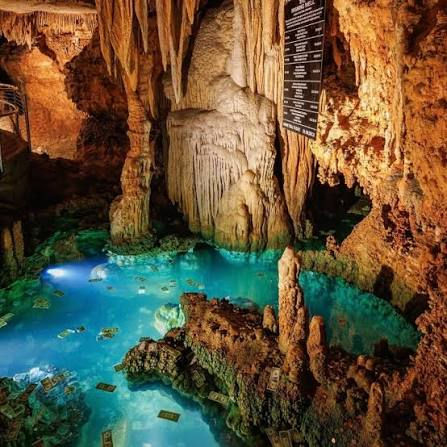
Luray Caverns is in the Shenandoah Valley of Virginia, about 2½ to 3 hours' drive from Baltimore, so it is a very popular day trip.
Some of its most memorable features are:
Magnificent stalactites hanging from the ceiling and stalagmites rising from the floor.
The famous Dream Lake, where the still water creates an almost perfect reflection, making the cave appear much deeper than it is.
The unique Great Stalacpipe Organ, a musical instrument that gently taps stalactites to produce musical notes—the largest instrument of its kind in the world.
Great Smoky Mountains
It is likely we entered Great Smoky Mountains National park from cherokee and Gatlinberg must be where we ended.

From black bears to salamanders, old-growth forests to spring wildflowers, log cabins to gristmills... the park offers myriad opportunities for exploring and discovering both the natural and cultural history of these ancient mountains. Great Smoky Mountains National Park covers 522,427 acres, divided almost evenly between Tennessee and North Carolina.
"We entered the Great Smoky Mountains from the Cherokee side in North Carolina. The climb through the mountains was pleasant but not particularly dramatic. What remained in my memory was the descent toward Gatlinburg. The road wound down through countless bends and curves, revealing changing views of forested hills at every turn. We were not used to such a long, twisting mountain drive, and that downhill journey became one of the most enjoyable and unusual parts of our Smoky Mountain trip.”

Sugarlands is the northern gateway to the Smokies near Gatlinburg, Tennessee. Several trails lead to peaceful streams and more. "The memorable part was not reaching a destination, but the drive itself — curve after curve through the Smokies, with the mountains unfolding around us as we descended toward Gatlinburg."
Foothills Parkway

A shorter but very curvy scenic drive through the Smoky Mountains, ending near villages such as Townsend or Wears Valley. Foothills Parkway East flanks the northeastern boundary of the park and offers unique panoramic views of the Smokies and beyond.The Foothills Parkway is a stunning scenic drive in East Tennessee, winding along the northern edge of the Great Smoky Mountains National Park. It currently features two completed, toll-free sections totalling about 39 miles, highlighted by the "Missing Link" that offers sweeping panoramic views of the Tennessee Valley. Enjoy a scenic drive with less crowding. The Foothills Parkway provides breathtaking views of the Great Smoky Mountains.
The Finger Lakes

During one of our early journeys through the United States, we drove through the Finger Lakes region of New York. The long, narrow lakes stretched across the countryside, surrounded by wooded hills and quiet villages. More than sixty years have passed, yet I still remember the peaceful beauty of that landscape. We were not there for fishing or boating, but simply to enjoy nature and discover another corner of America.
The Finger Lakes are a group of eleven long, narrow lakes.
Many travellers visit only the central five. They lie roughly north to south and include:
Canandaigua Lake
Keuka Lake
Seneca Lake (the largest by volume and deepest)
Cayuga Lake (the longest)
Owasco Lake
Their origin is actually quite fascinating. Millions of years ago, the region already had river valleys. During the last Ice Age, enormous glaciers moved south over the area. These glaciers deepened and widened the valleys by scraping away rock, much like a giant chisel. When the glaciers melted about 10,000–12,000 years ago, the valleys filled with water, creating the Finger Lakes.
Their long, parallel shape—like the fingers of a hand—is the result of this glacial carving. "The Finger Lakes owe their remarkable shape to the Ice Age. Vast glaciers carved deep, parallel valleys, and when the ice melted, these valleys filled with water, leaving behind eleven beautiful lakes that resemble the fingers of a hand."
Niagara Falls
Niagara Falls State Park is the oldest state park in the U.S. Established in 1885 as the Niagara Reservation, it was the first of several such reservations .
Niagara Falls is completely one of a kind and unlike anywhere else on the planet. But there’s much more to the park than the photos you’ve seen of the Horseshoe Falls.

"Long before one notices the crowds, one hears the deep, continuous roar. Then, as the river suddenly disappears over the edge, an immense curtain of water plunges into the gorge below, sending clouds of mist high into the air. It is not merely a waterfall but one of nature's great displays of power, reminding us how small we are beside the forces that have shaped the Earth.”
Today, the park’s signature attraction, majestic Niagara Falls, is the dramatic apex of the free-flowing waters of four of the Great Lakes into the Niagara River Gorge.
The water of Niagara Falls comes from the Great Lakes, but not directly from all of them. The flow works like this:
Lake Superior
↓
through rivers and locks
↓
Lake Huron
↓
(connected to)
Lake Michigan
↓
through the St. Clair River
↓
Lake St. Clair
↓
through the Detroit River
↓
Lake Erie
↓
through the Niagara River
↓
Niagara Falls
↓
Lake Ontario
↓
the St. Lawrence River
↓
the Atlantic Ocean.
So, the immediate source of Niagara Falls is Lake Erie. The water pours over the falls as the Niagara River carries it from Lake Erie down to Lake Ontario.
However, because the Great Lakes are all connected, the water that reaches Niagara Falls has often begun its journey much farther upstream, in Lake Superior, passing through Lakes Huron and Erie (with Lake Michigan feeding into Lake Huron).
This is one of the reasons Niagara Falls is so powerful: it carries the combined outflow of four of the five Great Lakes, making it one of the highest-flow waterfalls in the world.
Perched above the mighty Horseshoe Falls on Goat Island, Terrapin Point offers one of the most powerful views in the park. Feel the thunder of the Falls beneath your feet as water rushes toward the brink just steps away.
In my early days Niagara Falls did not have anything like an observation tower that I see in the description given. But we definitely took a boat tour.
NIAGARA FALLS OBSERVATION TOWER
Extending out dramatically over the Niagara Gorge, the architectural wonder of the Niagara Falls USA Prospect Point Observation Tower affords unobstructed views of the wild cascades of ALL THREE FALLS and the Niagara River.

Elevators at the Observation Tower provide access to the base of the gorge and the boarding site for the Maid of the Mist boat tour.

Monticello
We visited President Thomas Jefferson’s House in Charlottesville twice - once when we were at Johns Hopkins as students and later again with my daughter’s family when she was staying in Richmond ,Virginia. Since our first visit, it had become much more popular. My daughter especially valued Jefferson's authorship of the Declaration of Independence, and visiting his home made that chapter of American history come alive for all of us.
Thomas Jefferson was the third President of the United States, and principle author of Declaration of Independence.

Besides he was an architect, I read somewhere that when he didn’t like his first house - he built a new one, and the founder of University of Virginia.

At an earlier visit I have a faint remembrance of this property as a rather simple house. On second visit I found that it was a big house with a dome. It seems one doesn’t see the dome from every angle.
As it was a large property with many visitors, I found that we were required to buy passes for Bus to get there. Bus journey was short, gently uphill to the house.
On reaching there we were taken around from one room to other by ushers. When we came out we saw beautiful terraced garden and a view over Virginia.
Yosemite National Park

Yosemite is a land where history was made—USA first land dedicated to recreation and enjoyment.
Located in central California, Yosemite National Park was established in 1890
Of all parks Yosemite is my favourite park. The first time we went was during our Cross Country tour. Next time we went with a friend along with my daughter. She wanted to stay in a Camp so two of us stayed there. While others
stayed in regular Cabins.
Yosemite National Park is in California’s Sierra Nevada mountains. It’s famed for its giant, ancient sequoia trees, and for Tunnel View, the iconic vista of towering Bridalveil Fall and the granite cliffs of El Capitan and Half Dome. In Yosemite Village there are shops, restaurants, lodging and the Yosemite Museum. The park is also known for its Giant Sequoia trees, which are estimated to be over 3,000 years old.
Denali National Park

Known around the world for its amazing scenery and wildlife, Denali is a place of excitement, inspiration, and exploration for travellers.
At 6 million acres in size, Denali is incredibly vast, and hiking is possible almost anywhere in the park. However, there are only a handful of established trails in the park, and here you'll find a few suggestions for one or more short hikes from the Denali Visitor Center.
Denali is six million acres of wild land, bisected by one ribbon of road. As you drive along the road we see the relatively low-elevation taiga forest give way to high alpine tundra and snowy mountains, culminating in North America's tallest peak, 20,310' Mt.Denali.
Denali is home to many wild animals.
Wild animals large and small roam un-fenced lands, living as they have for ages. All around is Solitude, tranquility and wilderness. Denali is the third most prominent and third-most isolated peak on Earth, after Mount Everest, Mount Kilimanjaro and Mount Fuji.
Open year-round, activities at all levels of difficulty and exertion can be found. Most visitors come in summer, when access by bus into the park becomes possible as winter ice and snow lose their grip on the land. The hardy few that come in winter can expect solace, tranquility, and the challenges of extreme weather.
There is just one road in Denali, and activities can be grouped into things on (or near) that road, or farther away.
The eponymous home to North America's tallest mountain, Denali is a remote and beautiful park. We recommend a minimum trip of 3 days, 2 nights to the area, because of how long it takes to reach the park from Anchorage or Fairbanks. More time is great, but this trip lets you see the highlights of the park while on a tight schedule.
Closed in winter? Not so! Denali is open year-round. Intrepid travellers visit in every month, and the snowy season can still be a fantastic time to see the park. The activities suggested here can easily take up a full day, or could be stretched out over multiple days.
While most of Denali’s sole road is restricted just to bus traffic, anybody can drive out to Mountain Vista and Savage River. Located about 15 miles inside the park, the area is scenic, featuring several trails (some short, one long) and a picnic area.
Summer sight-seeing in Denali is mainly done by bus, and there are several trips to choose from. Transit bus trips are the cheapest and most flexible option, although they aren't narrated. From high up in a bus, it becomes possible to look over roadside brush, allowing you to enjoy the incredible scenery and wildlife sightings, too.
Denali provides habitat for 39 species of mammals, 169 species of birds, 14 species of fish, and one species of amphibian The large animals that are often the most sought after can be surprisingly elusive. The so called “Big Five”—moose, caribou, Dall sheep, grizzly bears, and wolves, receive the most attention, but it is a great place to see a wide variety of wildlife. The longer you spend in the area, the better your chances to see wild animals!
Aurora is like any weather phenomenon, where a forecast is issued each day. Unlike rain, though, aurora viewing can only occur when the far north is dark enough; and forecasts aren't nearly as precise as weather forecasts. Despite these challenges, any dark night in Alaska is a great time to look outside and hope for some signs of the Northern Lights!
Grand Canyon National Park
Grand Canyon National Park is one of America’s most famous natural wonders. Located in northwestern Arizona. It is the15th site to have been named as a national park.

The Colorado River is the river that carved the Grand Canyon over millions of years. It begins high in the Rocky Mountains of Colorado as a comparatively small mountain stream. As it flows southwest, many tributaries—smaller rivers and streams—join it, making it larger and more powerful. By the time it reaches northern Arizona, it has enough force to cut through layers of rock, creating the Grand Canyon.

The Colorado River begins as a modest mountain stream in the Rocky Mountains of Colorado. As it journeys southwest, countless streams and tributaries join it, transforming it into one of North America's great rivers. Over millions of years, this relentless flow carved through layer after layer of ancient rock to create the magnificent Grand Canyon, one of the world's greatest natural wonders.
Nearly two billion years of Earth's geological history have been exposed as the Colorado River and its tributaries cut their channels through layer after layer of rock while the Colorado Plateau was uplifted. While some aspects about the history of incision of the canyon are debated by geologists, several recent studies support the hypothesis that the Colorado River established its course through the area about 5 to 6 million years ago. Since that time, the Colorado River has driven the down-cutting of the tributaries and retreat of the cliffs, simultaneously deepening and widening the canyon. River carved the mile-deep canyon, creating breathtaking vistas that stretch as far as the eye can see. It sits at 7,000 feet above sea level. When you visit, you’ll be amazed by the colourful rock layers that tell Earth’s geologic story.
Standing at the rim, it was difficult to imagine that a river, beginning as a small mountain stream, could patiently sculpt such an immense landscape over millions of years. Nature's work is measured not in years, but in geological time.
The Grand Canyon is a massive, 277-mile-long and mile-deep gorge carved by the Colorado River.Spanning 277 miles long and up to 18 miles wide, it became a National Park Service in 1919 and a UNESCO World Heritage Site in 1979.
The park's central feature is the Grand Canyon, a gorge of the Colorado River, which is often considered one of the Wonders of the World. River carved the mile-deep canyon, creating breathtaking vistas that stretch as far as the eye can see. The canyon and adjacent rim are contained within Grand Canyon National Park. President Theodore Roosevelt was a major proponent of the preservation of the Grand Canyon area and visited it on numerous occasions to hunt and enjoy the scenery.
The Grand Canyon is known for its visually overwhelming size and its intricate and colourful landscape. Geologically, it is significant because of the thick sequence of ancient rocks that are well preserved and exposed in the walls of the canyon. These rock layers record much of the early geologic history of the North American continent. Most first-time visitors arrive via Arizona State Route 64 near Tusayan.
At night, the stargazing is incredible. The dark skies offer a perfect backdrop for viewing constellations and the Milky Way. Remember, Grand Canyon is on the ancestral lands of 11 Tribal Communities. Learning about their connections to this place adds depth to your visit.
The Two Main Regions (Rims)
South Rim: The most accessible and highly visited section. It is open year-round, operates 24/7, and houses the Grand Canyon Village. You can hike along the rim or venture into the canyon on steep trails. For a thrilling adventure, try whitewater rafting on the Colorado River. The park is home to diverse wildlife and plant species adapted to its unique environment. Keep your eyes peeled for bighorn sheep, elk, and California condors. The Yavapai Geology Museum, and the scenic Hermit Road drive are specially interesting. South Rim is typically open seasonally from mid-May through mid-October due to winter weather.

North Rim: Known for its thick forests, higher elevation (about 8,000 feet), and secluded atmosphere. It is roughly a 220-mile drive from the South Rim.

Temperatures on the North Rim are generally lower than those on the South Rim because of the greater elevation (averaging 8,000 feet or 2,400 meters above sea level). Heavy rains are common on both rims during the summer months. Access to the North Rim via the primary route leading to the canyon (State Route 67) is limited during the winter season due to road closures.
Our Second Visit
On our second visit to the Grand Canyon, we decided not to hurry. We spent a few days in Las Vegas, a city unlike any other, famous for its magnificent hotels, dazzling entertainment and casinos. Leaving behind its glitter, we drove towards Sedona. The scenery changed dramatically as red sandstone cliffs and crimson hills appeared on either side of the road. It seemed as though Nature herself had painted the landscape. From there we continued to the Grand Canyon, where the handiwork of the Colorado River over millions of years far surpassed anything that man could create.

Sedona, Arizona
The entire region is famous for its brilliant red sandstone cliffs.
The roads wind through spectacular red rock scenery that is unforgettable.
If you stayed for a couple of days, Sedona would fit your description perfectly.
"Las Vegas surprised us. Beyond the glittering casinos, we found unforgettable artistry. The dancing fountains of the Bellagio seemed to perform to music, the gondolas of the Venetian brought a touch of Italy to the desert, and the evening ended with Cirque du Soleil's breathtaking 'O'—a magical performance where water, light, music, and human skill blended into an experience we have never forgotten.”

The theatre inside the Bellagio is home to their famous production called "O" (pronounced simply "Oh").
What makes "O" unique is:
A huge stage that transforms into a deep pool of water.
Divers, synchronised swimmers, and acrobats performing together.
The stage appears and disappears beneath the water during the performance.
It is considered one of the greatest shows ever created in Las Vegas.
The fountains are set in a large lake in front of the hotel on the Las Vegas Strip.
More than 1,000 water jets create patterns that "dance" to music ranging from classical pieces to popular songs.
Some jets shoot water as high as 460 feet (140 metres) into the air.
The performances take place every 15 to 30 minutes, depending on the time of day.
We stayed at modest hotel across from a hotel which was like a river and boat.
The Venetian is famous for its indoor and outdoor canals, where gondoliers row visitors in Authentic Venetian-style boats while often singing. The hotel recreates parts of Venice, with:
The Grand Canal running through the resort.
Gondolas carrying guests beneath bridges.
Painted ceilings that resemble a blue sky with clouds.
Replicas of famous Venetian landmarks such as the Rialto Bridge and St. Mark's Campanile.

Many visitors walk through the hotel even if they are staying elsewhere because it is such a unique attraction.
We stayed across from The Venetian, we could easily have a walked to see the canals and then gone on to watch the Bellagio Fountains. The Las Vegas Strip is designed for that kind of exploration.
Across the street from Bellagio we went to see Cirque du Soleil. They are a world-famous Canadian entertainment company that presents spectacular productions combining acrobatics, dance, music, costumes, and theatrical storytelling.
Zion National park

Zion National park is in a southwest Utah nature reserve distinguished by Zion Canyon’s steep red cliffs. Zion Canyon Scenic Drive cuts through its main section, leading to forest trails along the Virgin River. The river flows to the Emerald Pools, which have waterfalls and a hanging garden. Also along the river, partly through deep chasms, is Zion Narrows wading hike.
The red and white sandstone cliffs of southwestern Utah tower hundreds of feet above the Virgin River, which meanders through their network of narrow canyons. The heart of Zion National Park is a secluded canyon that lies amidst this striking landscape.
It seems ironic that in unending desert, water creates this beautiful scenery.
On North zone of Zion rain falling on the 11,000 plateau races down hill and Creates this scenery. Water pushes this plateau in such a way that it creates
a series of cliffs creating a ‘Grand Staircase’.
When we went we enjoyed this walk along the river so much that we just walked and walked for a long distance, which was so enjoyable.But couldn’t reach Emerald pool - no chance to see water fall and Hanging garden.

When we got tired we turned around and had a nice meal. It was so beautiful that we set in chairs for long hours, just looking at the water falling from tall cliffs.
Bryce Canyon National Park

Bryce Canyon National Park is a stunning natural wonder in southern Utah. You’ll find it on the Paunsaugunt Plateau, where erosion has carved an amazing landscape.

The park’s main feature is its collection of hoodoos. These are tall, skinny rock spires that come in shades of red, orange, and pink. Thousands of them create a unique scene that looks like it’s from another planet.
We did not spend much time here. These paths let you get up close to the hoodoos and other rock formations. Some trails take you down into the amphitheater, while others give you views from above. Bryce Canyon is also known for its dark night skies.
Badlands National Park

Badlands National Park in South Dakota offers one a striking landscape of colorful buttes and spires. One finds eroded rock formations stretching as far as the eye can see. The park covers over 240,000 acres of rugged terrain. Its layered rock formations reveal millions of years of geologic history. Keep an eye out for wildlife like bison, bighorn sheep, and prairie dogs. Fossil hunters will be in heaven here. The park is one of the world’s richest fossil beds from the Oligocene epoch.
Don’t miss the scenic Badlands Loop Road. It provides access to many overlooks with jaw-dropping views. Stargazers will love the park’s dark night skies. Driving through Badlands National Park via the Badlands Loop Road takes about 1 to 2 hours if you drive straight through without stopping. However, most visitors spend 2 to 4 hours to enjoy the 14 scenic overlooks,
Custer state park & wind cave national park; both spots are also incredible
Mount Rushmore

Mount Rushmore National Memorial is a massive sculpture carved into Mount Rushmore in the Black Hills region of South Dakota. Completed in 1941 under the direction of Gutzon Borglum and his son Lincoln, the sculpture's roughly 60-ft.-high granite faces depict U.S. presidents George Washington, Thomas Jefferson, Theodore Roosevelt and Abraham Lincoln. The site also features a museum with interactive exhibits.
Mount Rushmore National Memorial is located in the Black Hills of southwestern South Dakota, USA, near the small town of Keystone.
Yellowstone Park
In our east to west coast trip we went to Yellowstone.

Yellowstone was the world's first national park, established in 1872. It set the example for national parks across the world. Located in Wyoming and spreads into Montana and Idaho. Yellowstone National Park is a nearly 3,500-sq.-mile wilderness recreation area atop a volcanic hot spot.
Beneath the park lies a vast volcanic system. That is why the area has so many geysers, hot springs, bubbling mud pots, and steam vents. features are in Yellowstone, fuelled by this ongoing volcanism.
In 1870 Among other findings, the Washburn Expedition discovered that one of the large geysers erupted regularly every 90 minutes and therefore named it Old Faithful. It has erupted with tremendous force twice in the last two million years.
Old Faithful is only one of hundreds of geysers in the park, though it is by far the most famous. Well over half of the world's geysers and hydrothermal features are in Yellowstone, fuelled by this ongoing volcanism.
It's also home to hundreds of animal species, including bears, wolves, bison, elk and antelope. Yellowstone Park is the largest and most famous megafauna location in the contiguous United States. The park is inhabited by grizzly bears, cougars, wolves, and free-ranging herds of bison and elk. The Yellowstone Park bison herd is the oldest and largest public bison herd in the United States.
Some Facts:
1. Old Faithful
This is the famous geyser with periodic eruptions. It erupts approximately every 90 minutes (the interval varies, usually between 60 and 110 minutes).
Each eruption lasts about 2–5 minutes.
The hot water shoots 30–55 metres (100–180 feet) into the air.
Visitors often gather on benches to wait for the eruption. Park rangers usually post the predicted time of the next eruption.

2. Yellowstone River

The Yellowstone River is the longest un-dammed river in the United States. One of its most spectacular sights is where it flows through the Grand Canyon of the Yellowstone, creating two magnificent waterfalls:
Upper Falls

Lower Falls, which drops about 94 metres (308 feet)—nearly twice the height of Niagara Falls.

The canyon itself has striking yellow, orange, and red rock walls, which many believe inspired the park's name.
3. Grand Prismatic Spring
It is the largest hot spring in the United States and is famous for its brilliant rings of blue, green, yellow, and orange created by heat-loving microorganisms.

4. Yellowstone Lake
Many visitors stop here briefly. It is one of the largest high-altitude lakes in North America, surrounded by mountains and forests.

The Grand Canyon of the Yellowstone (1872), a painting by Hayden survey participant Thomas Moran, demonstrated the grandeur of the new park to American viewers.
Today, Yellowstone is one of the best places in the world to see both grizzly bears and black bears living naturally. Visitors are required to keep a safe distance and never feed them.
Grizzly bears were once disappearing from much of the United States and became protected under the Endangered Species Act in 1975. Thanks to conservation, their numbers in and around Yellowstone recovered significantly over the following decades.
In the early days of the park:
Visitors often stopped their cars to watch and even feed bears.
Some hotels had open garbage dumps, and every evening bears would come to feed. Watching them became a tourist attraction.
As a result, the bears lost their natural fear of humans. Some became aggressive, and people were injured.


Grand Teton National Park.

We then drove south into Grand Teton National Park.
The landscape changed dramatically. Instead of geysers and steaming pools, we were greeted by the magnificent Teton Range—jagged granite peaks rising almost straight from the valley floor.

We probably drove along Jackson Lake and through the beautiful Snake River valley. Without stopping for the night, we continued our journey toward Jackson, Wyoming, or farther south and west.
Crater Lake National Park

While we were in Eugene, Oregon we stayed with a friend. With them we went for a walk along sea side. Saw lots of Seals and Sea Lions and also walked along a river. For the first time I saw sand Dunes by the sea side.
Seals Sea Lion
Crater Lake National Park in Oregon is a sight to behold. You’ll be amazed by its deep blue waters and stunning surroundings. The lake formed about 7,700 years ago when a volcano collapsed. It’s the deepest lake in the USA, reaching depths of 1,943 feet.
The water is incredibly clear and pure, fed only by rain and snow. You can drive around the rim of the crater for breathtaking views. In summer, take a boat tour to Wizard Island in the middle of the lake. Winter brings opportunities for snowshoeing and cross-country skiing.
The park is home to diverse wildlife. You might spot black bears, elk, or golden-mantled ground squirrels during your visit. Hiking trails offer chances to explore old-growth forests and volcanic landscapes.
The Cleetwood Cove Trail is the only path that leads down to the lake’s edge. Crater Lake was established as a national park on May 22, 1902. It attracts over half a million visitors each year who come to enjoy its natural beauty and unique geology.
The park was created in 1961 to preserve this unique area from overdevelopment. It was a new approach to conservation, balancing protection with existing towns and residents. Remember to be aware of your surroundings. While shark encounters are rare, they do occur in these waters. Always follow safety guidelines during your visit.
Redwood National Park

Redwood National and State Parks are home to the tallest trees on Earth. You’ll find these giants along the northern California coast. The park complex covers 139,000 acres. It includes one national park and three state parks working together to protect these amazing trees.
When you visit, you can walk among ancient redwoods that reach incredible heights. Some are over 350 feet tall! These trees have been growing for thousands of years. But it’s not just about the trees. The parks offer diverse landscapes for you to explore. You can hike through lush forests, relax on sandy beaches, or admire rugged coastal cliffs.
Wildlife is abundant here too. Keep your eyes peeled for Roosevelt elk, black bears, and various bird species as you wander the trails. The area has a rich cultural history as well. Native American tribes have called this region home for countless generations. Remember to bring your camera! The misty forests and towering trees create magical scenes you’ll want to capture.
Sequoia National Park

We were leaving from Los Angeles and made a stop in Sequoia National Park. It is a place of wonder in California’s Sierra Nevada mountains. You’ll find giant sequoia trees here, including the General Sherman Tree, the largest tree on Earth by volume.
The park was established in 1890, making it the second oldest national park in the U.S. It covers over 400,000 acres of diverse landscapes.

You can explore deep canyons, rugged foothills, and high mountain peaks. The park’s elevation ranges from 1,370 to 14,494 feet. Hiking is a popular activity in Sequoia. You can choose from short nature walks to challenging backcountry treks. Wildlife watching is another great pastime. You might spot black bears, mule deer, or even the elusive mountain lion.
Arches National Park

Arches National Park is a red-rock wonderland in Utah. You’ll find over 2,000 natural stone arches here, more than anywhere else on Earth. The park’s landscape is full of amazing rock formations.
You can see towering pinnacles, massive rock fins, and giant balanced rocks. Hiking is a popular activity in Arches. You can explore trails that lead to stunning viewpoints and unique geological features.

Rock climbing enthusiasts flock to the park for its challenging routes. If you’re into camping, you can spend the night under star-filled skies. The park’s beauty changes with the light. Sunsets paint the rocks in vibrant oranges and reds, creating unforgettable scenes.
Arches National Park offers a mix of easy and tough hikes. You can choose short walks or longer treks based on your skill level. Remember to bring plenty of water when you visit. The desert climate can be very hot and dry, especially in summer.
Cape Cod National Seashore Park

Cape Cod National Seashore Park offers you 40 miles of pristine sandy beaches along Massachusetts’ coastline. You’ll find a mix of natural beauty and rich history waiting to be explored.
The park protects diverse ecosystems including marshes, ponds, and uplands. These areas support many plant and animal species, giving you plenty of wildlife viewing opportunities.

You can visit historic lighthouses that dot the shoreline, offering glimpses into Cape Cod’s maritime past. Wild cranberry bogs showcase the region’s agricultural heritage.
For beach lovers, there are numerous swimming spots to enjoy. You can soak up the sun, splash in the waves, or take long walks along the shore. If you prefer land activities, the park has walking and biking trails. These paths let you explore different landscapes and enjoy scenic views.
The park was created in 1961 to preserve this unique area from overdevelopment. It was a new approach to conservation, balancing protection with existing towns and residents. Remember to be aware of your surroundings. While shark encounters are rare, they do occur in these waters. Always follow safety guidelines during your visit.
Hawaii Volcanoes National Park

You’ll find this park on Hawaii’s Big Island. It’s home to two of the world’s most active volcanoes: Kilauea and Mauna Loa. The park covers a huge area from sea level up to 13,680 feet. You can see lava fields, craters, and steam vents as you explore.
Hiking is a big draw here. You can walk through lush rainforests and across barren lava landscapes. Keep an eye out for unique plants and animals that have adapted to this harsh environment. At night, you might see the glow of lava from Kilauea.

It’s been erupting on and off for years, reshaping the land. The park also protects important cultural sites. You can learn about Hawaiian traditions and the connection between people and the land. Remember to check park conditions before you visit. Volcanic activity can sometimes close areas for safety reasons.
Kenai Fjords National Park

Kenai Fjords National Park sits at the edge of the Kenai Peninsula in Alaska. It’s a place where you can step back in time and see what the Ice Age might have looked like. The park’s main feature is the Harding Icefield.
From this massive ice sheet, nearly 40 glaciers flow down into the valleys below. It’s quite a sight to see! You’ll find a mix of icy waters and lush forests in the park. This blend creates the perfect home for all sorts of wildlife. Keep your eyes peeled for sea otters, whales, and seabirds.
The park’s landscape was carved by glaciers long ago. These ice giants shaped the fjords and valleys you see today. But things are changing. The glaciers are shrinking due to our warming climate. Kenai Fjords isn’t just about nature. It’s also rich in human history.

The Sugpiaq people have lived here for thousands of years. They built their lives around the sea and its resources. You can explore the park by boat, kayak, or on foot. Each way offers a unique view of this icy wonderland. Don’t forget your camera because you’ll want to capture these memories!
Canyonlands National Park

Canyonlands National Park is a stunning place in Utah. It’s big, covering over 337,000 acres of land. The park was set up on September 12, 1964. You’ll find four different areas in Canyonlands. These are called “districts.” Each one has its own special features for you to explore. The park is known for its deep canyons and tall cliffs. You’ll see lots of mesas too. These are flat-topped hills with steep sides.
Canyonlands is full of amazing rock shapes. Wind and water have carved them over many years. It’s like nature’s own art show. In 2021, nearly 912,000 people came to visit Canyonlands. That’s a lot of folks enjoying the park’s beauty! You can do many fun things here.
Go hiking, take photos, or just enjoy the views. If you like stargazing, the night sky is super clear. The park has two big rivers: the Colorado and the Green. They meet in the park, creating a special place called “The Confluence.” Canyonlands is a great spot to see how nature can shape the land. It’s a place where you can feel small next to big, old rocks.


Comments