Greece - 1965
- Usha Shah
- 7 hours ago
- 5 min read


In our last European visit we at that time didn’t go to Greece. After spending longer time visiting our respective hospitals in England this time, as we were returning to India we made a short visit to Greece.
Often referred to as the cradle of Western civilization, Greece profoundly shaped the modern world in areas like democratic governance, philosophy, theatre, mathematics, and the Olympic Games. Its rich historical tapestry spans the Classical era, the Byzantine Empire, and centuries of Ottoman rule, leaving behind spectacular archaeological site.
Greece is one of the world's premier travel destinations, celebrated for its food, sun-soaked beaches, and historical landmarks.
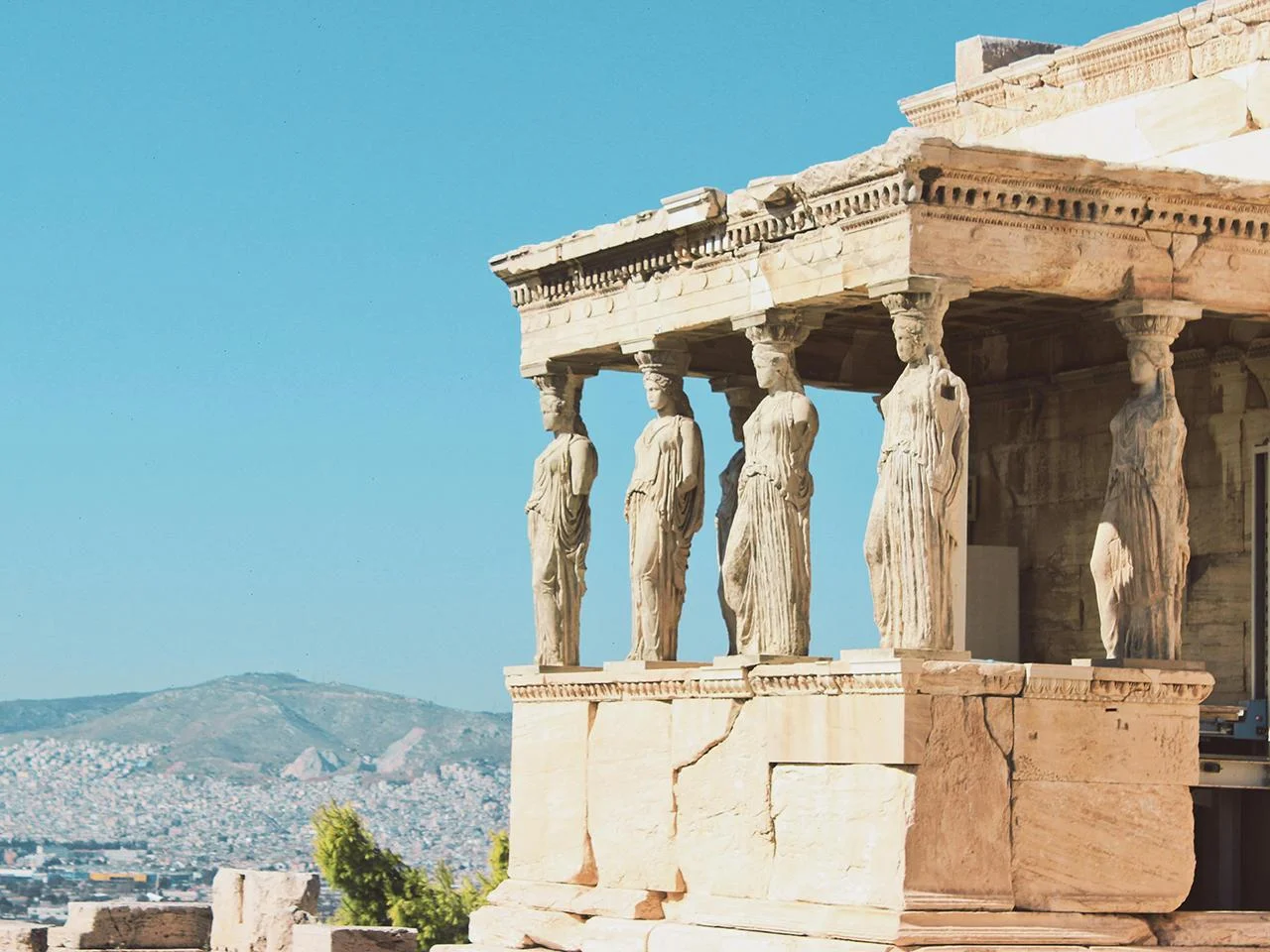
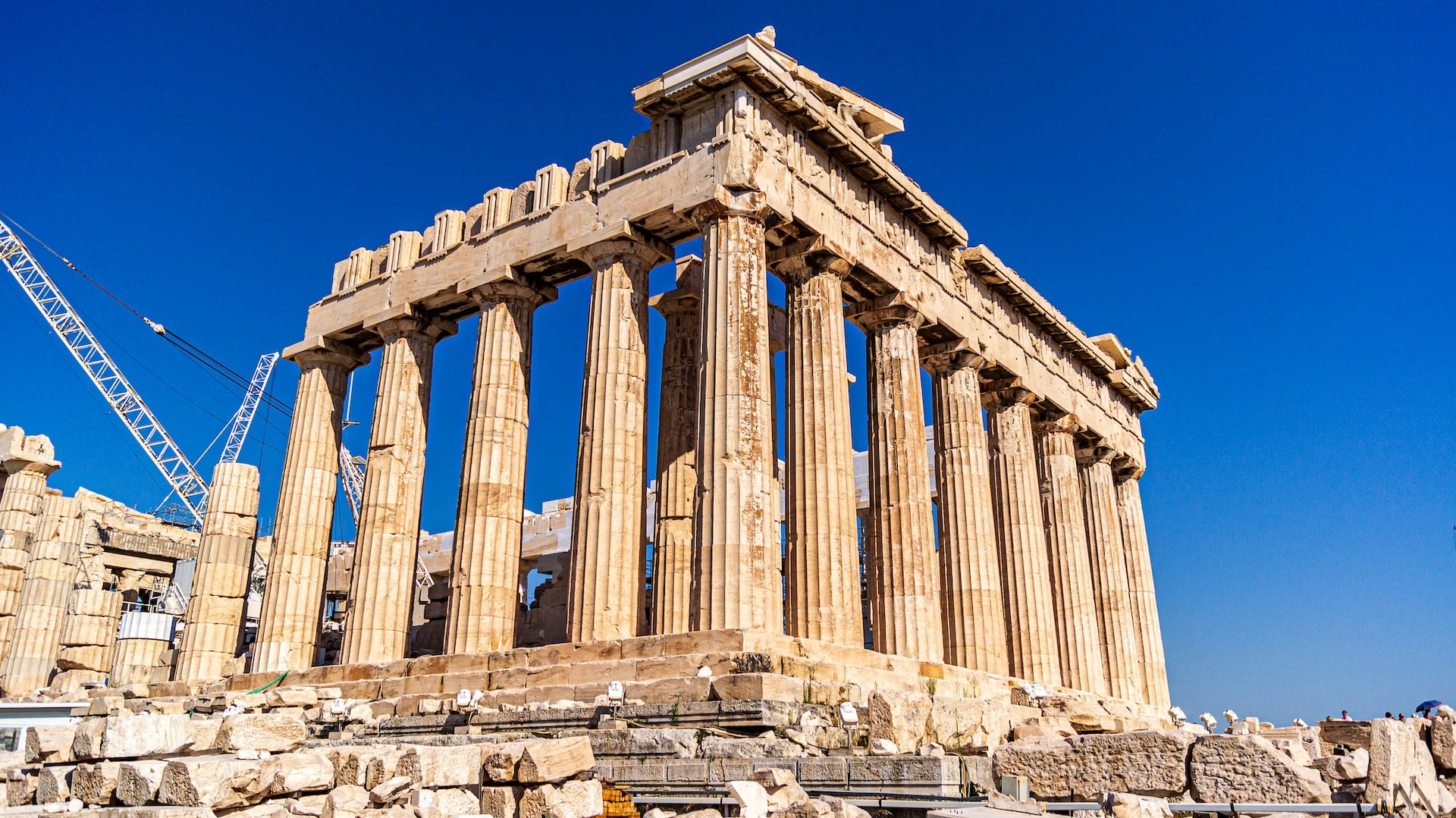


Our visit was short and basically stayed in Athens Home to iconic ancient monuments like the Acropolis and the Parthenon. Our only visit outside of Athens was a bus tour to Delphi.
Delphi
In ancient Greece, Delphi was considered the spiritual center of the Greek world. The Greeks believed that it marked the "navel of the world"—the point where heaven and earth were connected.

People travelled there from all over the Greek world to consult the Oracle of Delphi. The oracle was a priestess known as the Pythia, who delivered messages believed to come from the god Apollo. Kings, generals, and ordinary citizens all came seeking advice before making important decisions such as going to war, founding colonies, or undertaking major projects.
What makes Delphi special is not only its history but also its setting. The sanctuary was built high on the slopes of Mount Parnassus. Visitors see terraces of ancient ruins with mountains rising behind them and valleys stretching far below. Even today many people remember the landscape as much as the ruins. When I visited in 1964, I saw the remains of the Temple of Apollo, The ancient theatre overlooking the sanctuary, The Sacred Way, the path that pilgrims followed and The impressive mountain scenery surrounding the site.
Our Second Visit
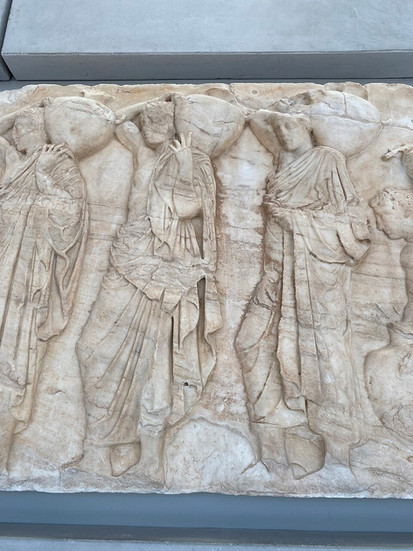
About 20 years ago we visited again and besides visit to ancient monuments like the Acropolis and the Parthenon, the big change I noticed was a new museum at lower location.






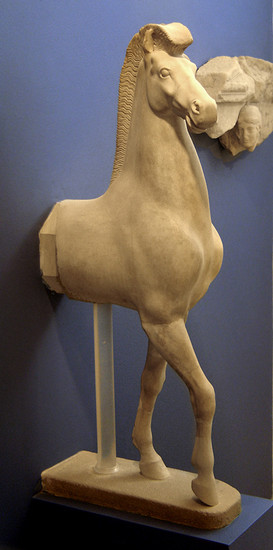
ISLANDS
This time the concentration was Islands Santorini and probably one more may be Mykonos - I am not sure.
Among the Greek islands we visited, Santorini remains the brightest memory. The island seemed to rise directly from the sea, its white buildings clinging to steep cliffs above the blue waters of the Aegean. Many details of the journey have faded with time, but the beauty of Santorini has remained clear in my mind. It was the jewel of our Greek island tour.
Santorini
Santorini is particularly interesting. When you stand on the rim of the caldera and looked across the sea, you are actually looking at the remains of a gigantic volcano whose collapse created the dramatic landscape that visitors admire today.

The hotel in which we stayed was like a high rise building. We were assigned the top level being the oldest couple, middle level was given to two ladies and the leader of our trip with his wife took the lowest level. Swimming pool was at the mid- level.
I researched about the earthquakes of Alaska and Santorini. I found that Santorini earthquake was years earlier than Alaska. The famous recent Alaska earthquake was the 1964 Alaska earthquake, which occurred on 27 March 1964 and was one of the most powerful earthquakes ever recorded, with a magnitude of about 9.2.
Santorini's most famous earthquake sequence was much earlier. The devastating events associated with Santorini are usually linked to the great volcanic eruption of Santorini (ancient Thera), which occurred around 1600–1500 BCE. Before and during that eruption there were major earthquakes that affected the island and surrounding regions.
So the two events are separated not by years but by more than 3,000 years.
What is fascinating is that both involved enormous geological forces, but in different ways:
Alaska 1964 was primarily a tectonic earthquake caused by movement of the Earth's crust.
Santorini (Thera) was part of a volcanic catastrophe involving earthquakes, volcanic explosions, and possibly tsunamis.

The Santorini eruption was so powerful that some historians and archaeologists believe it contributed to the decline of the Minoan civilisation on nearby Crete.
The Minoan civilisation is one of the oldest advanced civilisations in Europe. The Minoans lived mainly on the island of Crete from about 3000 BCE to 1100 BCE, long before the time of classical Greece, Athens, and the Parthenon.
The civilization is named after the legendary King Minos, although we do not know whether such a king actually existed.
Some remarkable things about the Minoans:
They built large palaces, the most famous being Knossos.
They were skilled sailors and traders, connecting Egypt, the Near East, and the Greek world.
They created beautiful frescoes showing dolphins, flowers, ceremonies, and everyday life.
Unlike many ancient civilizations, their art contains relatively few scenes of warfare. It often emphasizes nature, animals, and the sea.


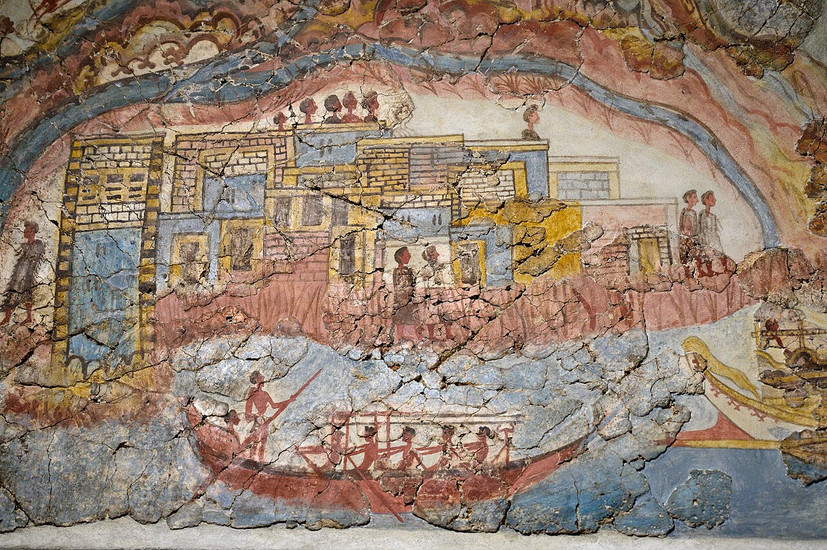
One of the mysteries is that we still cannot fully read their main script, called Linear A. As a result, much about their society remains unknown. The connection to Santorini is particularly fascinating. Around 1600 BCE, a massive volcanic eruption occurred on Santorini, then known as Thera. The eruption was one of the largest in recorded human history. It likely caused tsunamis and widespread disruption across the Aegean Sea. Many historians believe it weakened the Minoan civilization, although it probably did not destroy it immediately.
For someone who has visited Santorini, this adds another layer to the experience. The beautiful cliffs and caldera that visitors admire today were created by the same volcanic event that may have helped bring an ancient civilization into decline.
What I find especially appealing about the Minoans, and I think you might too—is that they seem to have been a people deeply connected to the sea. Their art is full of fish, dolphins, flowers, and flowing forms. Even after four thousand years, their paintings still feel surprisingly fresh and alive.
Mykonos
As I try to recall my island trip, Mykonos is certainly a possibility. Ferries from Athens regularly stop there, and it has a sizeable harbour. However, when people remember Mykonos, they usually remember the white town, windmills, and waterfront cafés more than a handicraft market near the port.

It belongs to the Cyclades, the same island group as Santorini, and is one of the most famous islands in Greece.
Mykonos is known for:
Whitewashed houses and narrow lanes.
Its iconic windmills overlooking the sea.
The waterfront area called Little Venice.
Beautiful beaches.
A lively atmosphere with many visitors from around the world.
Historically, Mykonos was also the gateway to the nearby sacred island of Delos, one of the most important religious sites in ancient Greece.


Comments