Bali & Java
- Usha Shah
- Apr 21
- 7 min read


We were in Singapore for a conference in Cardiology. My husband was invited for a special lecture. My husband had already received a ticket that allowed him lots of freedom.
But before that we also had to go to USA to meet our daughter. She was alone at the campus. So he went to Singapore first and from there he flew to USA. I went from Mumbai to USA and we met at the airport. We spent sometime with her and at required date he was back in Singapore. I also returned with him back to India., and from here I flew to Singapore and joined him. After the meeting we went to Bali and Indonesia.
Our journey to Bali began with a flight from Singapore, carrying us to an island that felt immediately different from anywhere we had been before. We stayed in a small hotel by the sea, likely in Kuta, where the sound of the waves was constant and soothing. In the evenings, the hotel would come alive with traditional Balinese dance performances held in an open garden. Under the night sky, with soft lighting and rhythmic music, the dancers moved with grace and expression, introducing us to a culture that seemed deeply rooted in art and devotion.
One of the most unforgettable sights was the temple set upon a rock in the sea — Tanah Lot. Standing there, surrounded by water, it appeared almost timeless, as though it belonged as much to nature as to faith. The simplicity and serenity of the place left a deep impression on us. In one of the village we saw a dance depicting Ram and king Ravan who had abducted Sita - Ram’s wife.
We also travelled inland, where Bali revealed another side of itself. In Ubud, we saw artists at work — wood carvings, sculptures, and paintings — each piece reflecting a quiet dedication to craft. The surroundings were lush and green, with a calmness that felt far removed from the coast.
From there, we went up into the mountains to see Lake Batur. The lake lay peacefully amidst the hills, but what fascinated us most was learning that the mountain beside it was in fact a volcano. The stillness of the lake, combined with the presence of the volcano, created a scene that was both beautiful and powerful — a reminder of nature’s quiet strength.
Looking back, Bali offered us a rare combination of sea, culture, and mountains. It was not just a place we visited, but an experience that stayed with us, gentle, artistic, and deeply connected to nature.
Yogyakarta
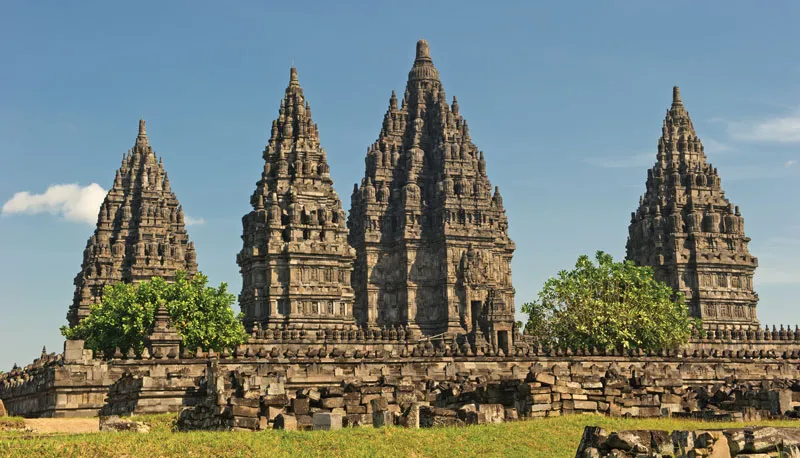


After Bali we went to Yogyakarta. First we visited Yogyakarta called “Jogja” by local people. The palace, Kraton Ngayogyakarta Hadiningrat, is not just a monument but a living residence of the Sultan. It’s not grand in the way of European palaces—it feels closer, more human. Courtyards, pavilions, soft colors… almost like the rhythm of daily life continues quietly inside. The streets are full of art, Batic fabric is seen in plenty along with paintings and carving in the market.
Batik – a living tradition

Yogyakarta is one of the great centers of batik—the art of dyeing fabric with wax patterns.
The smell of hot wax
Fine, patient handwork
Patterns that carry meaning, not just decoration
Borobudur


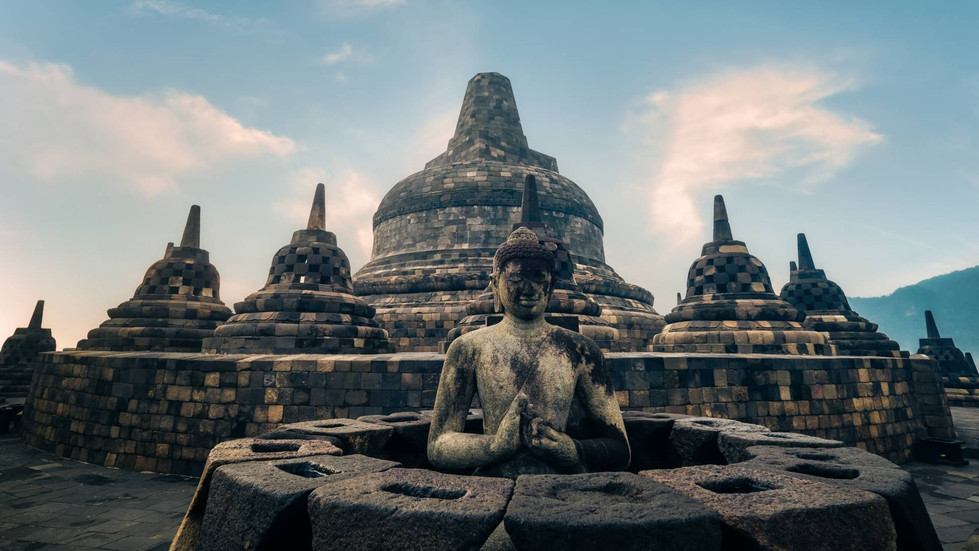
Next we went to see Borobudur , the most famous place. Borobudur is not just a monument—it feels almost like walking through a quiet, stone-made philosophy.
Set in the lush heart of Central Java, Borobudur rises out of green fields and distant hills—almost as if nature itself decided to shape a temple. Early morning is magical: mist hanging low, palm trees still, and the silhouette of the monument appearing like a memory rather than a structure. Built in the 8th–9th century during the Sailendra dynasty, Borobudur is the largest Buddhist monument in the world. But it is not a temple in the usual sense—it is more like a three-dimensional mandala, meant to be walked, not just seen.
The journey upward.
You don’t enter it—you ascend it.
The lower levels (Kamadhatu) represent the world of desire
The middle levels (Rupadhatu) reflect form and human life
The top (Arupadhatu) opens into the formless, the spiritual
As you walk clockwise along the terraces, you pass thousands of carved panels—stories from the life of Gautama Buddha, along with everyday scenes of ancient Java. It feels almost like reading a stone book.
The summit
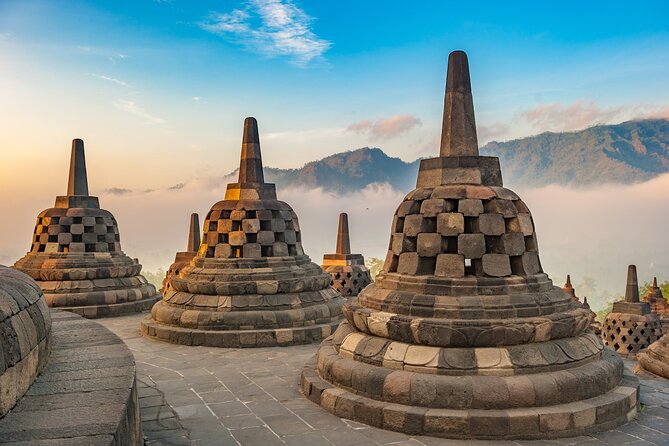
At the summit, everything changes. The space opens up to the sky, with circular terraces laid out in quiet symmetry, dotted by 72 perforated stupas surrounding a large central stupa that stands in complete silence. After the rich storytelling of the lower levels, filled with carvings and narratives, the summit feels almost empty—no images, no words, just space. This contrast is deeply intentional, reflecting a journey from the busy, detailed world below toward a state of inner stillness and calm. Around Borobudur, you’ll find volcanic giants like Mount Merapi and Mount Merbabu. The entire region is shaped by volcanic activity, which gives that deep fertile green landscape.
Prambanan
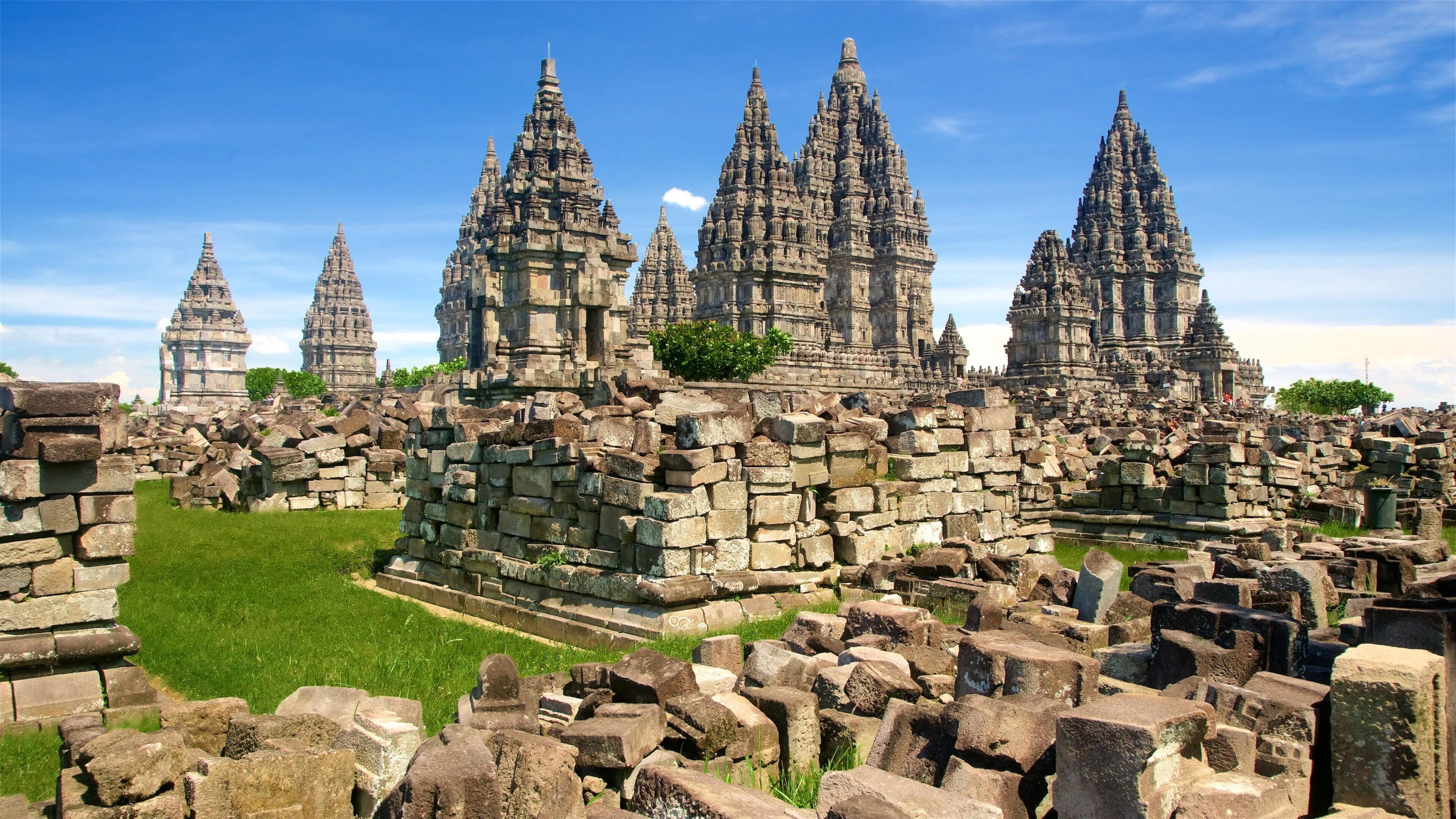


Prambanan is indeed a Hindu temple complex, and it feels completely different from Borobudur—almost like moving from meditation into epic poetry.
What Prambanan is
Built in the 9th century, around the same time as Borobudur, Prambanan is dedicated to the Hindu Trimurti:
Brahma – the creator
Vishnu – the preserver
Shiva – the transformer
The tallest and most important temple is dedicated to Shiva—rising sharply into the sky.
First impression
Where Borobudur spreads wide and low like a mountain, Prambanan rises tall and pointed, almost like a cluster of stone peaks. It has a dramatic, vertical elegance.
If Borobudur is about inner journey, Prambanan is about stories—especially the great epic Ramayana.
As you walk along the temple walls, you’ll see carvings narrating:
The life of Rama
Sita and her abduction
Hanuman leaping across to Lanka
It must feel quite special to see an Indian epic retold in stone… in Indonesia.
Borobudur feels inward, quiet, philosophical whereas Prambanan feels expressive, narrative, almost musical. If Borobudur is silence… Prambanan is storytelling.
Despite being in a different country, Prambanan reflects how deeply Indian culture once traveled across Southeast Asia—not as force, but as shared imagination.
The Ramayana Ballet at Prambanan

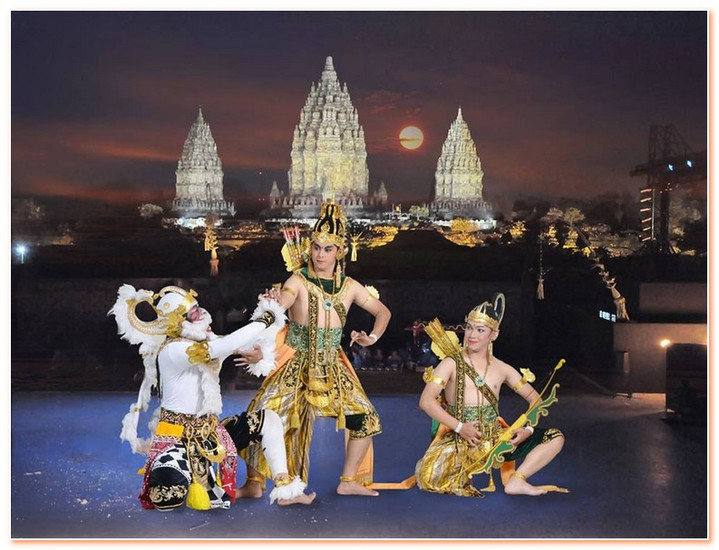


As evening falls, the temples are softly lit, and an open-air stage begins to glow. In the background, the silhouette of the Shiva temple rises quietly… and in front of it, the story of the Ramayana unfolds.
What you experience here is not a spoken drama, but a story conveyed through a rich blend of artistic expression. Graceful dance movements and expressive hand gestures, or mudras, carry the narrative forward, accompanied by the rhythmic and mesmerizing sounds of a traditional Javanese gamelan orchestra. The performers, adorned in elaborate costumes and ornate crowns, bring each character to life with striking visual detail. Though no words are spoken, the emotions and storyline come through clearly, making it possible to understand everything without a single line of dialogue.
The story on stage
You’ll recognize many familiar moments as the story unfolds—Rama and Sita in their serene, gentle love, the dramatic and commanding arrival of Ravana, and Hanuman, both playful and powerful, leaping energetically across the stage. Yet, despite these well-known scenes, the style feels distinctly Indonesian—slower in pace, highly stylized, and almost like watching shadows come to life, giving the entire performance a unique and mesmerizing quality.
There is often a scene where Hanuman sets Lanka ablaze—performed with real fire effects. Against the dark sky and temple backdrop, it becomes unforgettable.
Unlike Indian performances, this one feels more meditative in rhythm, with less reliance on dialogue and a greater emphasis on gesture and stillness. It is deeply connected to nature and the surrounding space—you sit under the open sky, often with a soft breeze, as the story you have known all your life quietly returns in another form, familiar yet transformed. It’s almost like discovering that stories don’t belong to one country—they travel, transform, and still remain themselves.
Bandung

Bandung is a hill city surrounded by volcanic mountains, and the journey up to it is filled with lush greenery and beautifully terraced fields. As you ascend, the air grows noticeably cooler, adding to the sense of retreat from the plains below. Over time, it has also become known as a place for important meetings and conferences, blending natural beauty with historical significance.
Bandung is famous for the historic Bandung Conference. In 1955, leaders from newly independent Asian and African nations gathered there—including India. It was a major moment in post-colonial history, shaping cooperation among developing countries.
The Journey
The journey is defined by winding mountain roads, with rice fields spread out like steps carved into the hills, and a landscape filled with mist, greenery, and quiet villages. Often, these are the memories that stay with people even more than the destination itself. It is not dramatic in the way of the Alps, but instead offers a gentle, immersive beauty that feels deeply soothing and calming.
Around Bandung, the landscape is dominated by volcanic mountains—and not just distant ones, but very present, almost surrounding the city. The most famous one is Mount Tangkuban Perahu. This is a striking volcano just north of Bandung. What makes it special is that you can go quite close to the crater itself. It has a broad, open shape—very different from the perfect cone one might expect.

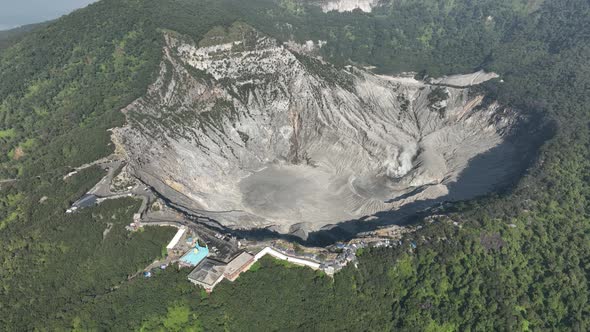



Its name even means “upturned boat”, based on a local legend. When I went near the crater of Mount Tangkuban Perahu near Bandung, the fumes I saw were real volcanic gases—sulphur dioxide, carbon dioxide, and other acidic vapours—rising constantly from the earth, almost as if the mountain were quietly breathing. I did see some birds fly near it and felt very sorry for them. Birds do sometimes fly across these areas, but they usually don’t linger in dense fumes and instinctively avoid the strongest gas zones. While the open crater may appear harsh to us, for them it is simply another part of the landscape they navigate with care. That said, very high concentrations of these gases can be harmful even to animals.

Comments