Kingdom of Jaisalmer

Updated: May 2
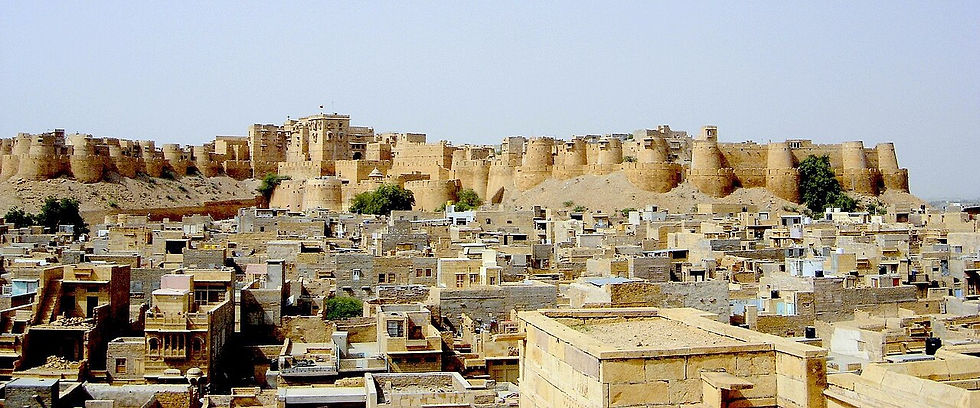
When we reached Jaisalmer, we checked into a hotel and rested after the journey. The next morning, we set out to wander through the old city. As we walked through its narrow lanes, we came across the marvellously carved havelis—each one more intricate than the last. The delicate stonework, almost lace-like, seemed impossible to achieve by hand, yet there it was, glowing golden in the desert sunlight.
While exploring, we struck up a conversation with a local artisan. He told us he was working on carvings for a family in Mumbai who owned a private home on an island near Alibaug. It was fascinating to see how this centuries-old craftsmanship still travels far beyond the desert, connecting places and people.

The following day, we headed toward the desert. Not far from the city, we saw visitors riding camels across the sand dunes. We too decided to try a short camel safari. The gentle, rhythmic movement of the camel and the vast openness of the desert created a feeling of calm that is difficult to describe.
What made the experience even more special was what followed. The camel owner invited us to his home, located right in the middle of the desert. It was simple, yet full of warmth. He offered us a freshly prepared lunch, which we shared in that quiet, endless landscape. There was something deeply touching about his hospitality—so natural and generous. Afterward, he brought us back to the city.
During our conversation, he mentioned that a special train would be arriving the next morning called The Palace On Wheels, one that brought tourists who stayed only a day or two. He himself worked as a guide for such visitors, helping them experience a glimpse of desert life in a short time.
Even now, it is hard to put into words the beauty of Jaisalmer. It is something that cannot truly be explained—it has to be seen and felt for oneself.
History of Jaisalmer
The Kingdom of Jaisalmer was a kingdom in the far-western part of present-day Rajasthan, India, from the mid-12th century CE until 1947. In 1156 CE, Rawal Jaisal moved his capital from Lodhruva to Jaisalmer because the former was vulnerable to attacks from Turko-Afghan and Baloch tribes. The descendants of Jaisal continued to exercise absolute control over Jaisalmer until 1818 CE, when a treaty of subsidiary alliance with the British East India Company bringing under British protection and sphere of influence. Known as the Maharawal, the native ruler of the princely state was entitled to a 15-gun salute.
The Bhatis of Jaisalmer belonged to the Bhati dynasty, a Yaduvanshi clan of Rajputs. They reportedly originated in Mathura through a common ancestor named Rao Bhati, who is claimed to be a descendant of Pradyumna. According to the seventeenth-century Nainsi ri Khyat, the Bhatis after losing Mathura moved to Bhatner in Lakhi Jungle, and from there to other locations in western and northwestern India including Rajasthan and Punjab. Rao Bhati conquered and annexed territories from 14 princes in Punjab, including the area of what is now modern-day Lahore. He is also credited with establishing the modern town of Bathinda in the Lakhi Jungle area in the 3rd century. According to Satish Chandra, the Hindu Shahis of Afghanistan made an alliance with the Bhati rulers of Multan, because they wanted to end the slave raids made by the Turkic ruler of Ghazni, however the alliance was defeated by Alp-Tegin in 977 CE.
In 1156, Rawal Jaisal moved his capital from Lodhruva to Jaisalmer and the state took its name from this new capital. Around 1299 CE, Rawal Jait Singh I faced a long siege by Alauddin Khalji of Delhi Sultanate, who is said to have been provoked by a Bhati raid on his treasure caravan. By the end of the siege, facing certain defeat, the Bhati Rajput women committed 'Jauhar', and the male warriors under the command of Mularaja met their fatal end in battle with the Sultan's forces. For a few years after the successful siege, the fort remained under the sway of Delhi Sultanate, before being eventually reoccupied by some surviving Bhatis.
In 1541 CE, Rawal Lunakaran also fought Mughal emperor Humayun when the latter attacked the fort on his way to Ajmer. He also offered his daughter in marriage to emperor Akbar. Mughals controlled the fort until 1762. The treaty between the East India Company and Mulraj on 12 December 1818 allowed the Mulraj to retain control of the fort and provided for protection from invasion. After the death of Mulraj in 1820, his grandson Gaj Singh inherited control of the fort.
In 1156, Rawal Jaisal moved his capital from Lodhruva to Jaisalmer and the state took its name from this new capital. Around 1299 CE, Rawal Jait Singh I faced a long siege by Alauddin Khalji of Delhi Sultanate, who is said to have been provoked by a Bhati raid on his treasure caravan. By the end of the siege, facing certain defeat, the Bhati.
In 1541 CE, Rawal Lunakaran also fought Mughal emperor Humayun when the latter attacked the fort on his way to Ajmer. He also offered his daughter in marriage to emperor Akbar. Mughals controlled the fort until 1762. The treaty between the East India Company and Mulraj on 12 December 1818 allowed the Mulraj to retain control of the fort and provided for protection from invasion. After the death of Mulraj in 1820, his grandson Gaj Singh inherited control of the fort.
Jaisalmer, the "Golden City" in Rajasthan's Thar Desert, is renowned for its yellow sandstone architecture, the living 12th-century Jaisalmer Fort, and vibrant camel safaris. It is a premier cultural destination known for its ornate havelis, desert festivals, and proximity to the Pakistan border.

Jaisalmer is a former medieval trading center and a princely state in the western Indian state of Rajasthan, in the heart of the Thar Desert. Known as the "Golden City," it's distinguished by its yellow sandstone architecture. Dominating the skyline is Jaisalmer Fort, a sprawling hilltop citadel buttressed by 99 bastions. Behind its massive walls stand the ornate Maharaja's Palace and intricately carved Jain temples.
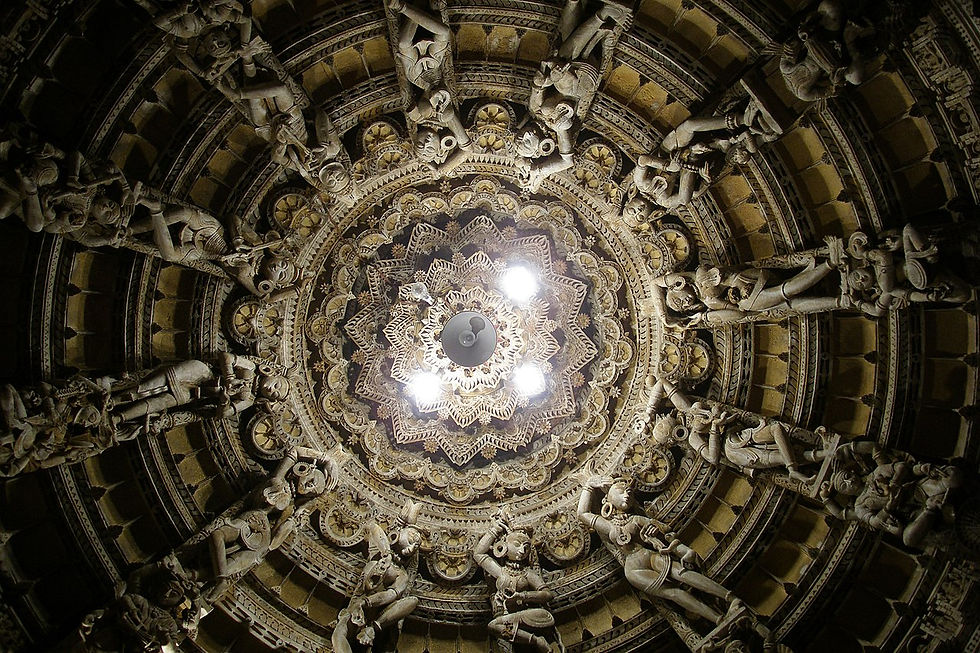
My brother was in Jodhpur and he joined us in Jaisalmer. We took him around the city, the havelis and the temples. We later went back to Jodhpur with him.


Comments